With competitive prices and honest service, we are one of the best places to sell gold US Coins around the Chicago area. We accept walk-ins to sell your coins, paper money, gold, silver, & estate jewelry.
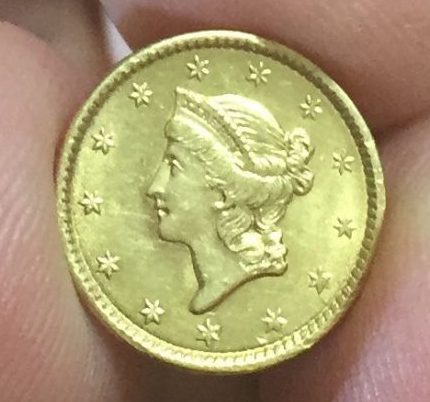
If you’re like many people in the Chicago area, you may have a few gold coins tucked away in a drawer, safe, or deposit box. Perhaps they were inherited from a relative, purchased years ago as an investment, or collected over time. Whatever the reason, now may be the perfect moment to turn those coins into cash.
At Oakton Coins & Collectibles, we make selling gold coins in Chicago straightforward and secure. We offer free appraisals, no-pressure consultations, and instant payment. Whether you have a single coin or an entire collection, our experts will carefully test, weigh, and price each piece according to current market values.
Even if your coins are worn, uncertified, or part of an estate, we’re interested. Our offers are based on the latest gold spot prices and numismatic value when applicable.
Oakton Coins & Collectibles has been serving Chicago and its suburbs since 2014, earning a reputation for honesty, professionalism, and competitive pricing. Our Skokie location provides free parking, private appraisals, and a secure environment with 360-degree video surveillance and controlled entry.
Sell Chicago Saint Gaudens $20 Gold Coin (1907-1933), or Liberty $20 Gold Coin (1850-1907)
The double eagle is a $20 gold coin of the United States. It contains 0.9675 troy ounces (30.0926 grams) of gold, which was valued at $20 based on the official price of $20.67/oz in 1849. These coins are composed of 90% gold (0.900 fine or 21.6 karats) and 10% copper alloy, with a total weight of 1.0750 troy ounces (33.4362 grams).
The names “eagle,” “half eagle,” and “quarter eagle” were specifically assigned to these coins in the Act of Congress that authorized their creation (“An act establishing a mint, and regulating coins of the United States,” section 9, April 2, 1792). Similarly, the double eagle was given its name in the Coinage Act of 1849 (“An act to authorize the coinage of gold dollars and double eagles,” title and section 1, March 3, 1849). Prior to 1850, the largest denomination of US coin was the $10 eagle. These coins were referred to as “double eagles” because their value was twice that of the eagle.
The first double eagle was minted in 1849, coinciding with the California Gold Rush. Two proof pieces were produced that year. One is currently housed in the Smithsonian Institution in Washington, D.C., while the location of the second coin remains unknown after being sold as part of Treasury Secretary William M. Meredith’s estate.
In 1904, President Theodore Roosevelt aimed to enhance the beauty of American coinage and proposed Augustus Saint-Gaudens as a suitable artist for the task. Despite encountering difficulties with the Mint and its chief engraver, Charles E. Barber, Saint-Gaudens accepted Roosevelt’s invitation. The project faced significant delays due to Saint-Gaudens’ declining health and challenges posed by the high relief of his design. Saint-Gaudens passed away in 1907 after creating the designs for the eagle and double eagle, but before they were finalized for production. The new coin came to be known as the Saint-Gaudens double eagle.
Regular production of the double eagle continued until 1933 when the official price of gold was changed to $35/oz by the Gold Reserve Act. The 1933 double eagle is highly sought-after and valuable, with only one known specimen, known as the King Farouk specimen, remaining in private hands. This coin was acquired by King Farouk of Egypt in 1944 and was sold in 2002 for $7,590,020. Twelve other specimens exist, two of which are held in the National Numismatic Collection and the United States Bullion Depository at Fort Knox.
Sell Chicago Liberty $10 Gold Coin (1838-1907), Indian Head $10 Gold Coin (1907-1933)
Prior to 1933, the eagle served as the largest base-unit of denomination among the five main decimal units used for circulating coinage in the United States. These units included the mill, cent, dime, dollar, and eagle. The relationship between these units was based on the decimal system, where a dime equaled 10 cents, a dollar equaled 10 dimes, and an eagle equaled 10 dollars. The eagle denomination formed the basis for the gold quarter-eagle ($2.50), gold half-eagle ($5), eagle ($10), and double-eagle ($20) coins.
In most cases, the denomination of a coin prior to 1933 was closely tied to the precious or semi-precious metal that constituted the majority of the alloy used in that coin. This practice followed the established European tradition of assigning different base-unit denominations to different precious and semi-precious metals. In the United States, the cent represented the base-unit of denomination for copper coins, while the dime and dollar served as the base-units for silver coins. The eagle was designated as the base-unit of denomination for gold coins, although unlike “cent,” “dime,” and “dollar,” gold coins did not specify their denomination in terms of “eagles.” As a result, a double eagle coin indicated its value as “twenty dollars” rather than “two eagles.”